Inside Edition a 10 Year Old in Charge of a Baby
Information technology was Dag Hammarskjöld, the tragic second Un secretarial assistant general, who had it best. The United Nations, he said, "was created not to lead flesh to heaven simply to save humanity from hell".
The kind of hell Hammarskjöld had in mind was not hard to imagine in the wake of world state of war and Hitler's extermination camps, and with the cantlet flop'due south shadow spreading beyond the globe.
How much of a part the United nations played in holding nuclear armageddon at bay divides historians. But there is niggling doubt that in the lifetime that has passed since it was set up in 1945 it helped save millions from other kinds of hell. From the deepest of poverty. From watching their children die of treatable diseases. From starvation and exposure as they fled wars made in the cauldron of ideological rivalries between Washington and Moscow but fought on battlefields in Africa and Asia.
The UN's children'due south arrangement, Unicef, provided an educational activity and a path to a better life for millions, including the present Un secretarial assistant general, Ban Ki-moon. The United nations's development programmes were instrumental in helping countries newly freed from colonial rule to govern themselves.
And yet. In its seventy years, the Un may accept been hailed as the corking hope for the future of mankind – but information technology has also been dismissed as a shameful den of dictatorships. It has infuriated with its numbing bureaucracy, its institutional cover-ups of corruption and the undemocratic politics of its security quango. Information technology goes to war in the name of peace only has been a bystander through genocide. It has spent more than one-half a trillion dollars in 70 years.
"Like everybody says, if you didn't accept the UN you'd accept to invent information technology," said David Shearer, who served the arrangement in senior posts in Rwanda, Belgrade, Afghanistan, Republic of iraq and Jerusalem. He is now New Zealand'southward shadow foreign government minister. "Simply it's imperfect, of grade it is, and everybody knows that it is," he said.
As the United nations marks the 70th anniversary of its founding this fall, those imperfections – and how the UN addresses them – have come to the fore equally the organisation struggles to define its role in the 21st century.
Tensions between western governments, which see the UN as bloated and inefficient, and developing countries, which regard it as undemocratic and dominated by the rich, take rippled across the organisation as ballooning costs drive the push for reform.
Even accounting for inflation, almanac United nations expenditure is 40 times higher than it was in the early 1950s. The organisation at present encompasses 17 specialised agencies, 14 funds and a secretariat with 17 departments employing 41,000 people.
Its regular budget, which is agreed every ii years and goes to pay for the toll of administering the Un – including mouthwatering daily allowances which result in many of its bureaucrats beingness far better paid than American ceremonious servants – has more than doubled over the past two decades to $five.4bn.
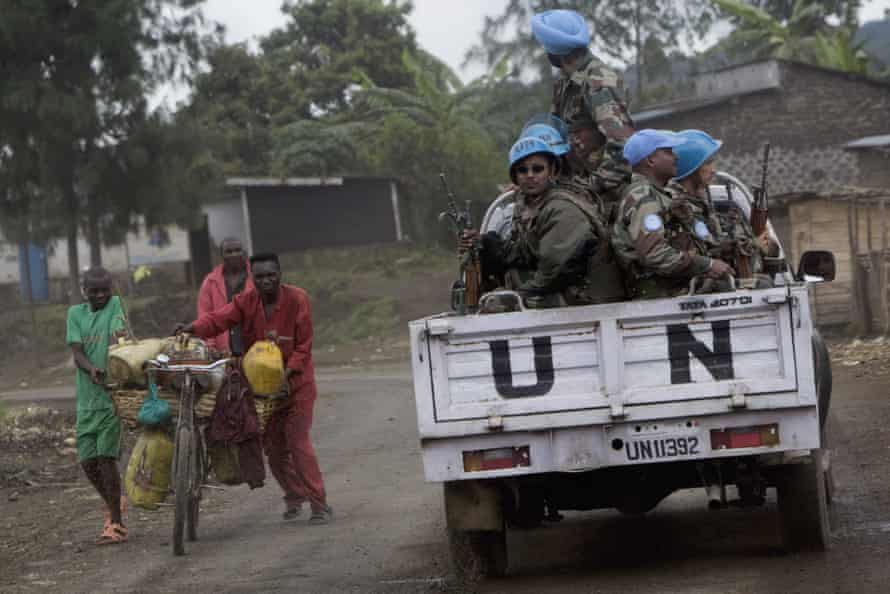
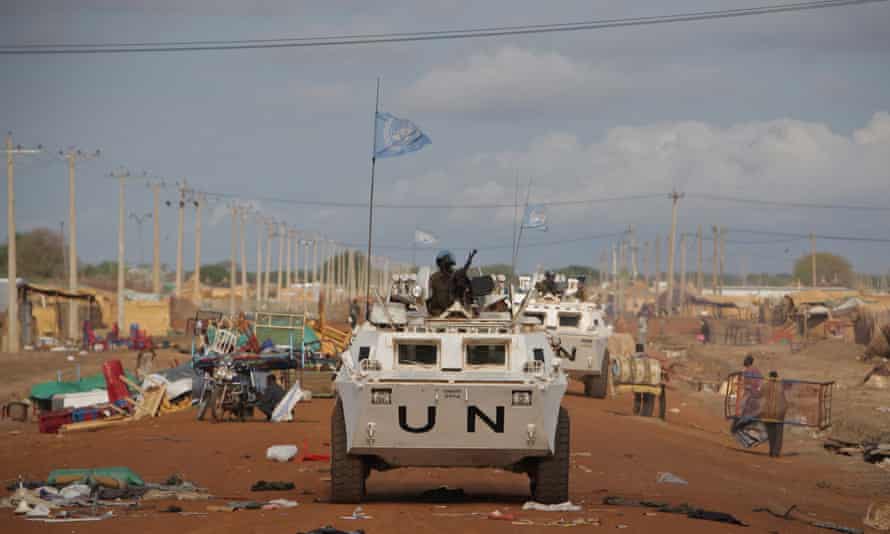
Simply that is but a minor portion of the total spend. Peacekeeping costs another $9bn a year, with 120,000 peacekeepers deployed by and large in Africa. Some missions have lasted more than a decade. And then there are the voluntary contributions from private governments that go to fund a large part of disaster relief, development work and agencies such as Unicef. They accept risen sixfold over the past 25 years to $28.8bn. And yet fifty-fifty at that level, some agencies are warning that they are operating on the brink of bankruptcy.
Even with costs surging fourfold in the final 20 years, total UN spending this year is still only near half of New York Urban center's $75bn budget.
"There is no unmarried institution that I found more exhilarating at its best, nonetheless more than debilitatingly frustrating at its worst, than the United Nations," said Gareth Evans, a former foreign minister of Australia and stiff critic of the fashion the UN is run. He said his efforts to accelerate reform of the Un "were about equally quixotic and unproductive as anything I have ever tried to practice".
That'due south a sentiment widely shared among diplomats and United nations officials.
Valerie Amos, Britain's old international development minister, described the UN equally a valuable ally in delivering Great britain aid simply lamented its inefficiency.
"There were concerns most the United nations being overly bureaucratic and slow in the way it dealt with evolution issues. I think that'southward one of the criticisms of the UN that remains until now, that since information technology was formed it has become bigger and bigger. Many organisations accept overlapping mandates. It's get an organisation that'south quite unwieldy in lots of respects," Lady Amos said.
Helen Clark, head of the Un Development Programme (UNDP) and the nearly powerful woman at the United nations, dealt with the organisation from the exterior equally prime minister of New Zealand. She said that as the leader of a small-scale country she valued being able to utilise the United nations's size and resources to deliver New Zealand's assist program, such as emergency assist to Republic of indonesia after the 2004 tsunami.
But once she started work at the UNDP half dozen years agone she was less impressed. "When I arrived, the system was a little over a year into its first ever strategic plan. What that tells you is that modernistic direction and modern strategic planning was late coming to the UN," she said. Clark laughed equally she said the plan she was presented with was and then wide in its goals that it made no sense.
Shearer, who headed Save the Children in Somalia, Rwanda and Sri Lanka earlier joining the UN, said the organisation's forcefulness lay in what he chosen its "gravitas". Governments may turn away NGOs simply the Un cannot be ignored. Neither tin the UN's huge logistical capabilities, such as the World Food Programme's airlifts, be matched past any private arrangement.
But he said the Un was weighed downward by "incompetence" and red tape. "It'southward a very heavily bureaucratic arrangement. It hasn't inverse in a lot of years. It'southward built systems on top of systems on top of systems," he said. "Getting the right people, that was the Rosetta Stone of the Un for me. Once I croaky that, it meant I could apply the organisation how it was supposed to be used irrespective of the structure, because the construction will always protect the incompetent, in a sense."
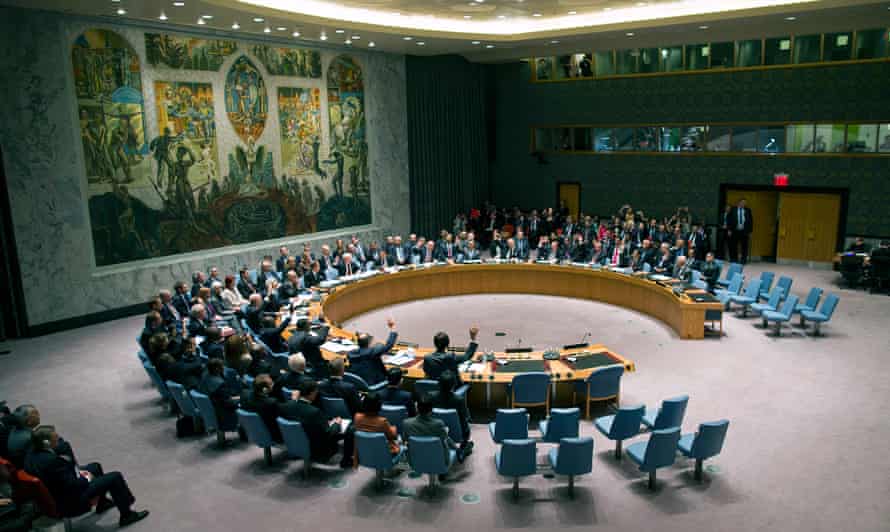
A decade ago, the UN launched its most enduring report into reform. A panel – co-chaired by the prime ministers of Mozambique, Norway and Islamic republic of pakistan, and including the then British chancellor, Gordon Brown – wrote a devastating document. It ticked off criticisms which said the United nations was badly declining those it was supposed to help. Its work on development was described equally "oftentimes fragmented and weak"; its governance was called "inefficient and ineffective".
The written report said the UN'due south gustation for setting goals at the expense of delivering results failed the poorest and most vulnerable. It too criticised a system of funding for many UN programmes in which officials had to beg for money from governments year after year, making it difficult to plan.
"Cooperation between organisations has been hindered by competition for funding, mission creep and by outdated business practices," it said. "In some sectors, such as water and free energy, more than than xx UN agencies are active and compete for limited resources without a clear collaborative framework. More than 30 UN agencies and programmes have a stake in environmental management."
The organisation has grown and then big that at times it is working against itself. Critics point to large numbers of support staff doing ill-defined jobs. Staff costs business relationship for two-thirds or more than of some United nations agencies' outgoings. "Performance management is a joke," said one official. "Almost everyone gets 'above average' in their assessment."
The United nations is so fragmented that each agency has its own Information technology system.
The reform report noted that almost 1-tertiary of the United nations operations in 60 countries had a upkeep of less than $2m per agency, which meant that they could exercise petty more than than afford the cost of running the function.
The report proposed all-encompassing changes to promote greater collaboration and efficiency under a plan called Delivering equally Ane. This included myriad United nations agencies in a unmarried country coming under the authority of 1 official, and working more closely with the governments of those countries, which oftentimes had no idea what the Un was doing.
Ban, who recalls learning from books provided past Unicef as a child after his family was forced to flee during the first United nations-led war in his native Korea in the 1950s, told the Guardian that rapid change was happening and that Delivering every bit One was at the heart of it.
"The United Nations of today is hugely different from the Un 70 years agone, and therefore it is very important the Un changes and adapts itself to changing circumstances," he said. "It'southward been irresolute, very drastically at present. I have seen this kind of duplication between and amongst Un agencies, for example h2o issues. Delivering as 1, working as one, in the Un, that's the chief motor of my administration and I have been engaging with all different agencies and funds and programmes and so that we can Deliver as One."
But that is not what others run across. A airplane pilot programme was rolled out in viii countries and was regarded as successful. Just the broader reforms never came.
The executive director of the reform study was Adnan Amin, a Kenyan development economist who was caput of the Primary Executives Board for Coordination, which represents all Un programmes equally well as associated organisations such equally the Globe Bank and the International Budgetary Fund. He said the changes proposed in the study were "fundamentally good ideas" but had not had the impact its authors had hoped for.
"It's led to reams of reports written in the UN, many of them impenetrable to the rest of the world because of the jargon used. I retrieve there has been incremental progress but I don't think we can say there'southward been a fundamental change in the fashion the United nations does business," he said.
Amin said the United nations had set itself yet more goals merely failed to heed the report's warning almost lack of results.
"What we have at present is another multiplication of targets and goals which are an extraordinarily comprehensive assessment of what's needed to be washed only in that location's no operational clarity around them. Who'due south going to do it? Who's going to monitor it? Who's accountable for information technology? The goals themselves are pretty impressive simply it doesn't say anything to the UN about what they should be doing," he said.
"We still take a lot of fragmentation. There are about i,200 land offices of the UN around the world. There are 100 countries with more than 10 United nations country offices in each country. You lot have country offices with a upkeep of eight or 9 million [dollars] and a staff of v people. Half the money goes for the operational expenses of the function, leaving what is actually a minuscule amount of money for programming or central activities. In the context of what'due south happening today, a few meg is not going to make any difference."
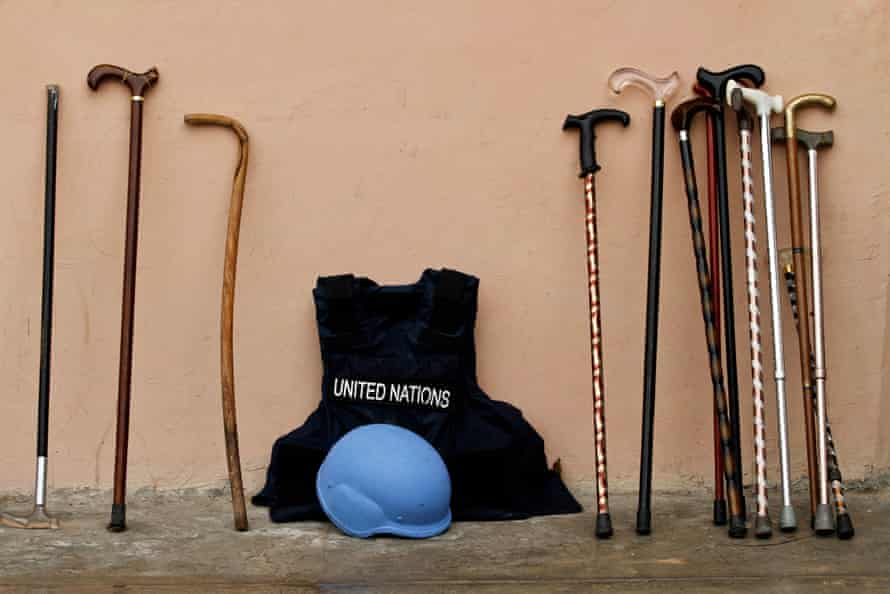
The elevate on reform comes from different directions. Some UN agencies resist information technology.
Clark chairs the United nations Development Group, an umbrella of major agencies, where she is responsible for implementing Delivering as One. "When I started learning virtually the cabalistic intricacies of Delivering as One, in that location were criticisms that it was very bureaucratic and process oriented. I take to say I believe in that location was some truth in those criticisms," she said.
She introduced a system, known as standard operating procedures, which she said was aimed at "not having the whole working together try drowned in process". "It hasn't been easy because there are many different agencies involved and they take all adult over the years their ain procedures and ways of working. Information technology has required long and patient negotiation to get to the indicate of having standard operating procedures. It couldn't just be decreed because no 1 has the ability to prescript it," she said.
But the bigger obstruction to reform perhaps comes from the UN members states themselves.
After she left the British regime, Amos became the UN undersecretary full general for humanitarian affairs.
"I don't remember people give enough weight to the fact that the United Nations is a body fabricated upwards of its member states of 193 nations. Yous have fellow member states coming at the reform agenda with very, very different perspectives," she said. "One of the things I saw close up was that if, for case, you had a United nations entity based in a particular country and you are seeking to reform and streamline and so on, very often that country will argue strenuously confronting taking away any resources.
"Even if yous're saying you desire to cutting a few staff because it makes sense to have them somewhere else, there volition exist really serious lobbying confronting that."
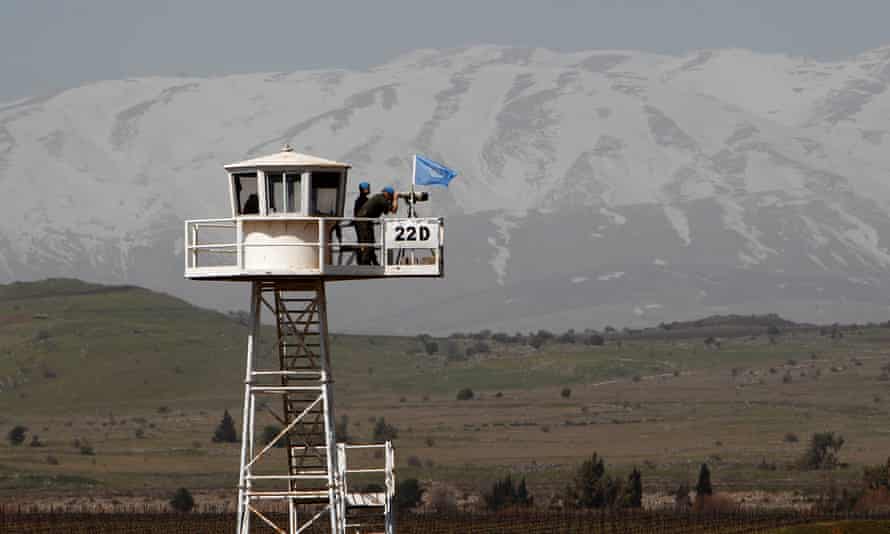
Amin was confronted with this when the panel drawing upwardly the reform report attempted to get understanding on some of the changes it recommended.
"Y'all can hardly bear upon whatever mandate, as minuscule as it might be, that doesn't have 1 or ii potent advocates from member states behind information technology," he said. "Through a very bruising one-year consultation process it became very evident that there was not that much that could exist done that could fly politically and nosotros ended up getting rid of two small-scale gender outfits and creating a much bigger gender agency."
One diplomat points to the saga of the UN print shop in New York, a growing anachronism in the digital age. Later on it was flooded during Hurricane Sandy in 2012, officials seized the opportunity to close information technology down and shed threescore jobs. Fifty-fifty though those afflicted were promised work elsewhere in the United nations, there was strong resistance from a grouping of developing countries opposed to the cutting of any posts.
Reformers are pushing for the 80 divide locations where Un payrolls are processed to be whittled down considerably, but have once again see resistance. They question the need to take large numbers of routine administrative jobs in loftier-cost cities such as New York and Geneva. They ask why foreign nationals on expensive expat packages, which pay for benefits such as private pedagogy for their children, are recruited to do them.
In that location is a trend by the countries which pay well-nigh of the bills to portray the poorer ones, grouped in the G77 of 134 nations, every bit a drag on modernisation and the primary obstruction to reform.
But G77 countries say that behind claims of greater efficiency and mod management methods, wealthier nations are tightening their grip on the UN.
India is a leading member of the G77. Its ambassador to the UN, Asoke Kumar Mukerji, said the rich countries took the high-level jobs in the name of efficiency.
"If yous expect at the secretariat of the Un information technology is dominated by industrialised economies because they are the ones who contribute the bulk of the budget and they get the bulk of the positions in the secretariat, managerial positions," he said. "The indicate that the G77 is an obstacle isn't fair considering the G77 is marginalised in the overall secretariat of the United nations."
Clark has been praised for her reforms of the UNDP. She is touted as a potential successor to Ban and the UN's first female secretary general, although the politics of the date, which moves betwixt regions, is a large obstacle. The New Zealander is lauded by some western diplomats for forcing through reforms, which they say are making the UNDP more efficient.
The G77 sees it differently. Information technology has criticised what it says are the diminishing number of managerial jobs within the UNDP for people from the developing countries the plan is supposed to exist serving. Mukerji said it was an issue increasingly raised at UNDP lath meetings.
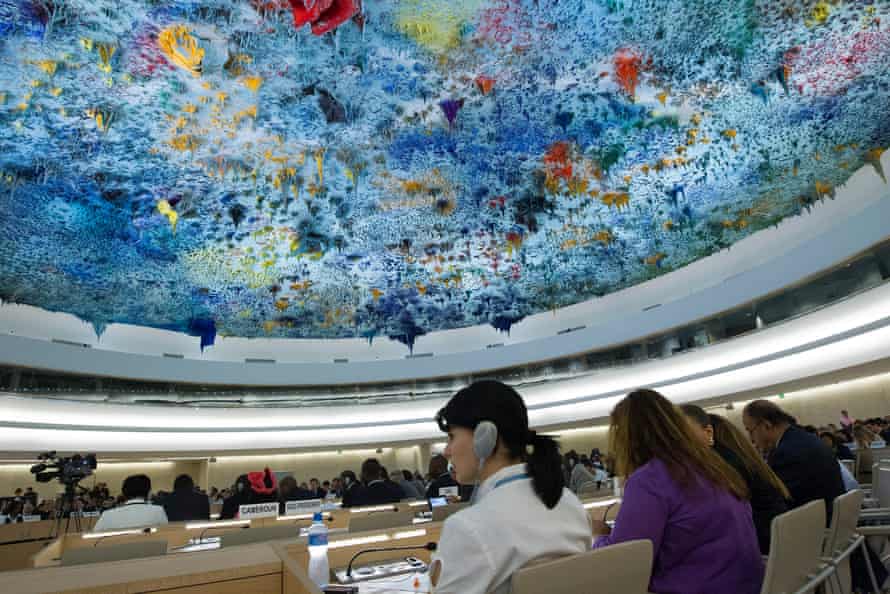
"If you do not have developing country people inside the structure of the UNDP at managerial level up to the senior management, and so you practice have an bureau which doesn't understand the ethos of the countries where information technology operates," he said.
The divvying up of jobs is a source of perpetual tension within the United nations. "At that place's an enormous corporeality of lobbying past member states for particular jobs," said Amos. "I was rather taken aback at the amount of lobbying that goes on and that does non only become on for senior jobs, it goes on for jobs across the system.
"How y'all reflect in a 193-fellow member country organization the variety of the member states and retain a merit-based organization is a huge challenge for the UN. We have to move away from this idea that it's near having people who tin somehow run an calendar for that detail country."
Ane senior UN official said politics continued to play a major part in the allocations of jobs.
"Appointments should be on merit only the truth is that if a detail country, one you need to go along on side for political or financial reasons, wants you to put one of its own in to a detail job, then sometimes you lot do it if it'south not going to mess things up too much. Sometimes that person is very competent. If they're not you lot simply end up working effectually them," he said.
"Information technology does mean that in that location are people who don't seem to be specially good or work very difficult at what they exercise. But there are other people who are very good and they behave the rest."
Although the major powers mutter most developing nations insisting on what ane official chosen "jobs for the boys", they bear little differently. "The permanent members of the security quango all await to have a senior person from their country around the UN table," said Amos.
The US gets Unicef and the World Food Program. China runs the Section of Economic and Social Affairs. Russia is in accuse of offense.
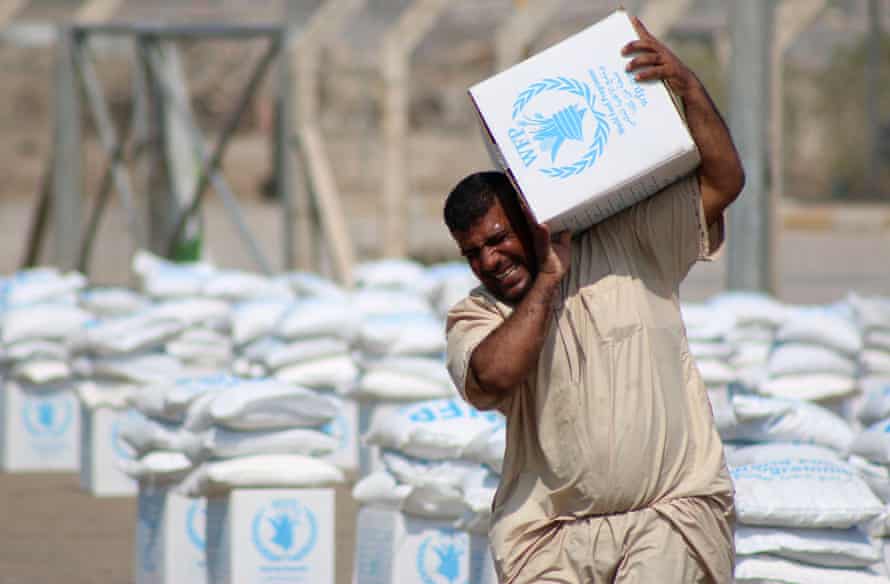
Amos's former job equally head of humanitarian affairs is regarded as a British fiefdom. Her predecessor was British; so was her successor. That appointment laid bare the entitlement felt by the UK.
The prime minister, David Cameron, put forward just ane name to the UN for the mail – his former health minister Andrew Lansley. Ban demanded he submit at least three and somewhen a onetime minister at the Section for International Development, Stephen O'Brien, was appointed. Although Cameron did not become his outset pick, the mail remained in British hands.
The sharpest confrontations over money and cuts come up in what is known as the United nations's fifth committee, which oversees upkeep and administration. Because it is open to all fellow member states and makes decisions past a simple majority, the committee is where the G77 exerts its greatest influence.
"There are massive fights," said i official who described the Us, Eu, Japan and Commonwealth of australia on the side of cutting budgets, inefficiency and jobs while the G77 was painted as wanting more spending and more jobs for their nations.
The UN's largest contributors have a caustic view of the commission, regarding it as run by countries who brand a minimal contribution to the cost of the UN but make up one's mind both the secretariat and peacekeeping budgets.
Officials and diplomats of all kinds bemoan a lack of believing leadership. They have one eye on the secretary general, Ban Ki-moon, but he is a production of the permanent members of UN security quango.
"Information technology would be smashing to see what deviation a potent secretary general would make," said one elevation official. "We all say it knowing that it is unlikely that nosotros will ever get ane because the stronger member states accept such an interest in not having a strong secretary general. They want a secretary general they are able to influence, foyer."
Which raises what many consider the real obstacle to remaking the Un for the 21st century – that its most powerful body is nevertheless locked in 1945.
The five permanent members, the victors over Germany and Japan, concord the whip hand through vetoes. For all the racket from the US, Uk and France in particular nearly modernising the UN, they show no willingness to give up the power they wield sometimes in means governed entirely by political interest. Since 1982, the US has used its security council veto to block resolutions disquisitional of Israel 35 times. The full number of resolutions blocked by other permanent members over the aforementioned flow is 27. More recently, Russia and China have used their vetoes to block UN intervention in Syria.
Republic of india, the world's second nearly populous nation, is pushing for expansion of the security quango to include six more permanent members with the right of veto, every bit well as several more non-permanent members. Mukerji, the Indian ambassador to the UN, said his country had been pressing for several years for agreement on a document that volition be the basis of negotiations.
"Information technology'due south incredible that in the United Nations, which produces negotiating texts on every other surface area it deals with, in the area of security council reform it has simply non been able to put a text on the table," he said.
Appetite for broader reform seems just as tepid.
"Where is the conversation happening which says that, in 2015 and across, what is the United Nations at that place for?" Amos asked. "What should be the cadre activities of the UN that should receive a significant proportion of the regular funding of the Un?"
houstoncomereaver.blogspot.com
Source: https://www.theguardian.com/world/2015/sep/07/what-has-the-un-achieved-united-nations
0 Response to "Inside Edition a 10 Year Old in Charge of a Baby"
Post a Comment