‘With school counsellors, it’s really hit-or-miss’: Behind the challenge of safeguarding student mental health
Advertisement
CNA Insider
'With school counsellors, it's actually hitting-or-miss': Behind the challenge of safeguarding student mental wellness
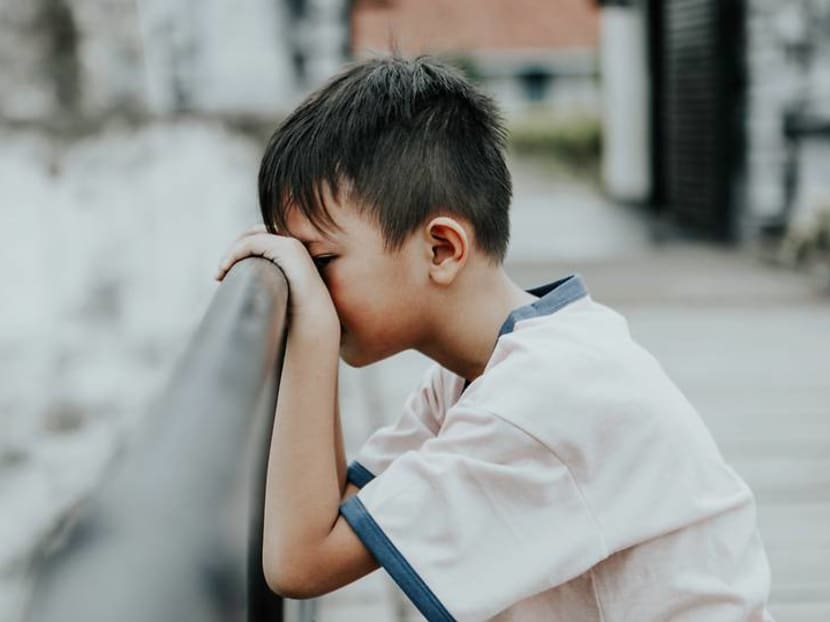
There is a disparity in student experiences when it comes to school counselling. (Photograph: iStock)
- Common complaints from students were that counsellors belittled problems or 'snitched' on them, merely some had positive experiences.
- Teachers said that having 1 or two schoolhouse counsellors is insufficient and does not offering choices to students.
- Teachers to receive enhanced training in mental health literacy, but some questioned whether the 'burden' should autumn solely on them.
- Beyond improving ratios and the quality of intendance, an attitudinal shift may exist needed.


* denotes proper name changed to protect the person'due south identity
SINGAPORE: When Jane* opened upwardly to her secondary school counsellor about the cold wars and troubles she was having with some close friends, she was told that "life's like that".
That was the then 14-year-old's first session.
"I felt ignored, like (school counselling is hopeless) fifty-fifty if I bring up my problems," said Jane, now 17 and in her first year at junior college.
She had been "mandated" to attend counselling because she was often late for course and did not submit homework on time. She recalled her form teacher telling her outside the classroom, in full view and inside earshot of her classmates, that a session had been arranged to address her tardiness.
"Information technology brings the idea that those who aren't faring well have some problems and need to meet the counsellor, rather than (the thought that) people … want to see a counsellor because of personal reasons," she said.
After iii compulsory sessions on her time management — none of which circled back to the effect with her friends — Jane did not hear from the counsellor again.
Then there is the contrasting experience of Hanna Lee, 19, who was asked to see a counsellor when she was in Secondary two for frequent truancy.
"It wasn't that I didn't want to go to schoolhouse. I simply had trouble with getting there regularly," she said.
Her form teacher, who was aware of her family issues, texted or chosen her whenever she was absent to ask what was going on. One day, the instructor said: "If you need some assist, I can arrange an date with the school counsellor."
Ms Lee was relieved. "I was finally getting aid," she thought. In the counselling room, where a diffuser emitted a calming scent and artwork adorned the walls, she sat on a couch with cushions all effectually, feeling safe as she vented (sometimes for up to iii hours).
She remembers learning breathing exercises and wanting to go to schoolhouse so she would non miss an appointment.
"Sometimes I'd tell myself I just demand to get through i more than 24-hour interval, and so I tin can go and release all of my frustrations," she said. "Equally (the counsellor) got to know me more, instead of just (letting me) vent, she would give me some communication to assistance me cope."
She saw the counsellor for three years, until she graduated from secondary school. Today, she is waiting to offset her undergraduate degree in philosophy.
Jane and Ms Lee start shared their experiences on Reddit, where CNA Insider saw at least three threads request most school counsellors.
While a handful of people shared positive experiences, there were common complaints that the counsellors belittled the students' problems by making comparisons with others, or that the counsellors would "snitch" on them to their teachers or parents.
Some of the youths agreed that "with school counsellors, it'southward really hit-or-miss".
In the calorie-free of the pandemic and the recent tragedy at River Valley Loftier School, the mental health of Singapore's distressed youth is back in the spotlight. Last week, President Halimah Yacob said on Facebook that parents, schools and society were "ill-equipped" to bargain with youths' mental health issues.
With school counselling being 1 of the first ports of call for students, why is in that location a disparity in their experiences? Given the job of managing both students' well-being and their bookish standards, what challenges practice schools face?
'JUST FOCUS ON STUDYING'
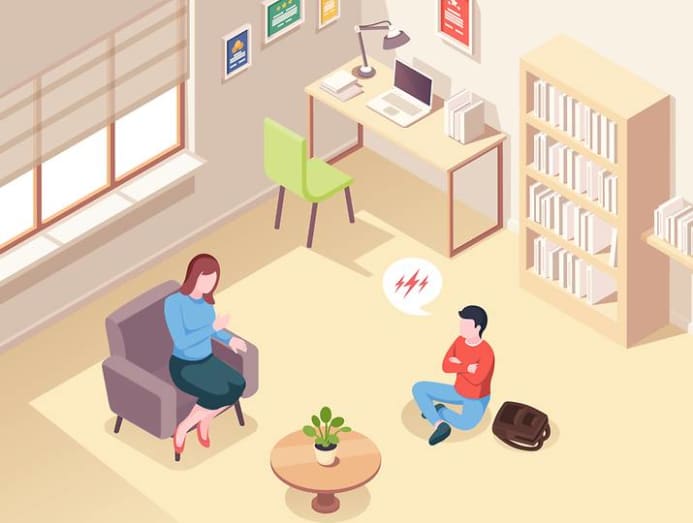
When Ms Lee entered junior higher, she decided to encounter the school counsellor to continue working on her issues. The feel this fourth dimension, nonetheless, fell short of the mark when the counsellor harped on ane question: "How is this going to affect your academic performance?"
"It felt similar I wanted to talk about the issue (affecting me), but I'thousand constantly being redirected to talk nigh some other matter," she said.
Unlike the sympathetic ear she was given at secondary school, she felt it was "a lot more" about the practicalities at junior college.
"(The counsellor) said, like, 'You have all these things, and you demand to learn which i to focus on. You but have two years; you demand to focus on academics.' And then I was more stressed," she said.
Students go to school counsellors because they need an escape from academics. But when they become to the school counsellor, they end upwardly talking more than almost academics. It's kind of counter-intuitive.
After that 60 minutes-long session, she never went back.
In response to a call via CNA Insider's Instagram account for experiences with school counsellors, one reader shared that he constantly felt dismissed past the counsellors from his university'southward counselling centre.
He was told things like, he was "not prioritising things" or he should "merely focus on studying, and everything else volition get sorted out".
The last straw for him? "I was told I should be similar other students and just written report, and not waste her time and mine," said the reader, who wished to remain anonymous.
He "struggled through a few more years" while dealing with his parents' matrimony problems, the family concern and a break-upward, and the centre did non reach out to him. He eventually quit schoolhouse.
DO COUNSELLORS REALLY 'SNITCH'?
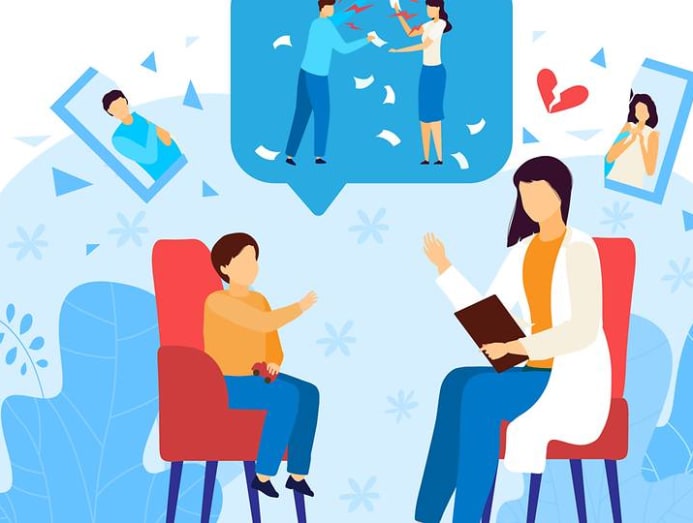
Besides feeling that their worries or stressors were "downplayed", many people in the Reddit threads were concerned that counsellors would "snitch" on students to their teachers and, especially, their parents.
"(Students) are scared to tell (their) parents. They don't want to disappoint the parents, or parents could be the source of their pain," noted sometime school counsellor Gary Koh.
Co-ordinate to him, all records are confidential, and there are only three instances when counsellors must intermission confidentiality: Impairment to cocky, harm to others or when the law comes into question.
But students believe what their peers take experienced or what they hear through the grapevine. Jane, who was sent to counselling for tardiness, shared about existence bullied with her counsellor. The next thing she knew, her teachers asked her for the names of those involved.
"I definitely was a scrap surprised," she said, as she was non told about the ground rules for confidentiality. While she was not likewise affected, equally the bullying incident was "kind of small", a friend who confided her sexuality to the same counsellor had it worse.
"She got scolded and punished by her parents. The counsellor reported information technology to the teachers, who called her parents," said Jane.
Another student, speaking to CNA Insider on condition of anonymity, said the experiences shared on Reddit "confirmed (her) fears" and that school counselling was "not very helpful in general". Others agreed that "snitching incidents limit the ability of students to share their issues".
Nevertheless, some students, similar Ms Lee, were told at the outset when the counsellor would take to pause confidentiality. So when she shared her suicide ideation with her counsellor some months afterward, she "knew what (she) was getting (herself) into".
Teachers, too, find confidentiality difficult to navigate. "Sometimes nosotros practise need to know, and counsellors may not be able to tell us anything," said sometime secondary schoolhouse teacher Rachel*, who left the profession last yr.
"As a teacher, I'd ask the counsellor how the student'southward doing. Is there whatsoever way I tin help? But in terms of what actually goes on, counsellors aren't supposed to (tell us)."
Where necessary, she used to enquire the students directly. "If (the counsellors) feel the need to get parents involved, they'd also have to consult the student," said Rachel.
Being informed beforehand made a difference for Phoebe Chew. She started seeing her counsellor in Secondary 3 as her teachers were concerned about her abode environment.
Nigh iii months later, she was informed that her parents would be contacted, though her issues were non related to harming herself or others, or anything to exercise with the law.
"That was one of the worst nightmares any student could possibly want," said Ms Chew, at present 21 and studying social work and psychology at university. "Simply I remember the schoolhouse counsellor had enough concerns to enhance them to my parents."
In the end, it was nonetheless a "nightmare scenario" every bit her "parents weren't happy".
THE PERENNIAL STIGMA
In serious cases, said Rachel, when she did need to involve parents, that was when it became "a bit tough".
"The resistance comes more from parents," she said. "Because some parents refuse to believe their child needs aid. They feel similar, 'Oh, it means (my child) is crazy.'"
All students CNA Insider spoke to also reported a sense of fright and shame when going to see the counsellor for the first fourth dimension.
Marcus* remembers the feeling as he walked to the counselling room, which was located within what looked like a pantry area.
"It feels like a very shameful thing, and I guess beingness in a schoolhouse environment, people gossip. I was really scared people would see me going to the counsellor and think something's incorrect with me," he said.
This thought was also triggered past a remark fabricated past his instructor, even before he considered going for counselling. In year two at junior college, Marcus experienced a bad break-up, and while on an overseas school trip, he broke down in the hotel lobby. His teacher was alerted.
"Basically, the teacher walked upward to me and told me, 'Actually, you shouldn't beat yourself up over a daughter. If you lot really tin't handle information technology, then I'll requite you lot the number of the school counsellor,'" recalled Marcus, now 21.
Hearing this, he thought, "Am I just emotionally weak? If I go to the school counsellor, information technology kind of ways I'm weaker than everyone else."
Only because he was "screwed upward", he decided he could apply some assistance from the counsellor, even if information technology felt "lame" and "emasculating".
Some students also said efforts to inform students nearly school counselling felt "virtually like an afterthought".
"Whenever the school mentions (it), it's ever very briefly, at the bottom of the (presentation) slide. 'Oh, past the way, we have a school counsellor, this is the number, the email. Then okay, side by side slide,'" Ms Chew said.
Others said the counsellor's function was "tucked away on an upper floor of the school" or "just some room next to the vice-principal's office", so information technology inappreciably felt prominent, much less welcoming.
But in Ms Lee's secondary school, mental health did not seem a taboo, thanks to the counsellor's efforts to de-stigmatise seeking help. There were "posters all around", and the counsellor regularly went on stage during assembly to introduce herself and say how she could exist reached.
She also walked around school, especially during recess, and smiled or waved at students she knew. If they gave any indication of being open to talk, she would walk upwards and check in with them.
"Most of the students knew that she was a school counsellor, and they were all very open up to her talking to students and being around," Ms Lee said.
RATIO OF COUNSELLORS TO STUDENTS
After her mixed experiences with school counselling, her middle yet goes out to the counsellors "because they're trying their all-time". With "1, at most two" counsellors serving a cohort of 800 to 1,000 students, she "understands the mental burnout".
"At this age, 13 to eighteen, information technology's the menstruation when teens become through the most mental instability, like stress and social anxiety. And pressures actually get to them, maybe because their brain hasn't developed notwithstanding or whatsoever," she said.
"That's … when, I feel, the most help needs to go out to students. But looking at the numbers lone, it's so inadequate."
On July 27, in the wake of the River Valley Loftier School incident, Instruction Minister Chan Chun Sing said in a ministerial statement that all schools now have at least i school counsellor, while some take two.
"Where viable, we'll recruit more school counsellors or 're-function' suitable educators, to augment the counselling support network," he said.
READ: MOE to strengthen support networks in schools; all teachers to go enhanced preparation on mental health literacy
Teachers told CNA Insider that having one or two school counsellors is insufficient for their schools, specially with the "increasing book of students who need mental health support".
"My school has two counsellors, and it'due south not plenty. They don't simply handle diagnosed mental health issues but all the other anxieties and misbehaviours daily, from all sorts of students who may just exist having a bad twenty-four hours," said Cindy*, a secondary school teacher.
Ex-teacher Rachel said school counsellors' heavy caseloads accept resulted in a prioritisation of "urgent cases", like those with suicidal tendencies, over others.
"Information technology makes sense, only there are students who are struggling with social interactions, for example, which are important likewise. And these things can build upward and escalate," she said.
"I know they're doing their best already, but in that location isn't enough of them to manage."
Some other teacher, David*, is at a schoolhouse with a population of "well-nigh 900 to i,000" and i school counsellor available. "Fifty-fifty if we increase to two counsellors, we're still talking about one counsellor to 400, 500 students," he said.
Noting that school counsellors oftentimes get above and beyond to care for students, he cited how his school counsellor walked one of his students with mental wellness issues to grade every twenty-four hour period to build trust and aid her overcome her anxiety.
"One case already takes a lot of energy," said David.
Compared to other adult countries, Singapore's ratio of students to counsellors appears to occupy a lower rung. Inquiry last year showed that schools in Ireland with more than 500 students must have one schoolhouse counsellor per every 250 students, like in the United states of america.

Some schools in Singapore, however, may have more than school counsellors than others. Mr Koh, who was a counsellor at an Integrated Plan school for ten years, said at that place was a team of seven counsellors to a cohort of 4,300.
That is a ratio of one to 600, which he felt was already "overwhelming" at times. "It'southward mentally tiring. All you need to take is i pupil who has depression — information technology'd suck the life out of you," he said.
He eventually left his chore attributable to the "trauma" of encountering "as well many" suicide cases in and out of school. "Information technology takes its toll on you," he said. "I needed to disconnect for my own well-being,"
Even so, he best-selling that he was "privileged" to have worked in a squad of counsellors equally it offered more choices to students.
"It's like seeing a doctor, right? All doctors are trained, only sometimes you go to one doctor, and you don't notice him helpful. Then you go to the next doctor down the road, you lot get the same medication, but something is different," he said.
"The benefit of having a pool of counsellors (is having) different modalities, dissimilar styles, unlike personalities … So a student who may not quite work well with me can observe another counsellor whom (he or she) can connect amend with."
David agreed as he has had a few students who have reflected that they had negative experiences with the school counsellor.
"Counselling is a very intimate kind of relationship. Sometimes it'due south just personality differences, (but) if they don't like it, information technology becomes a bad experience for them. That's the disadvantage of having only one school counsellor in the school," he said.
"If they take a bad experience, they won't exist then dandy to explore counselling over again."

EFFECTIVENESS OF TEACHER-COUNSELLORS
Equally part of plans to strengthen schools' capabilities, the Ministry building of Educational activity (MOE) aims to deploy more than than 1,000 teacher-counsellors in the adjacent few years, up from the 700-plus in schools at present.
Teacher-counsellors are teachers who have received boosted training and so they can help students who are dealing with more challenging social-emotional problems, such as grief and loss.
Speaking in Parliament this week, Mr Chan said: "Some of (the new teacher-counsellors) will volunteer, and some of them will be identified to accept on boosted grooming to go teacher-counsellors
"Instead of pedagogy ii subjects, they may reduce the load of teaching … to fifty-fifty become one field of study. But they take on the boosted responsibilities within the schoolhouse to help in the counselling service provided."
While having more teacher-counsellors may assistance to have some load off school counsellors, experts CNA Insider spoke to said playing a dual part can be "conflicting" for teachers sometimes.
"Though there are similarities (between both roles) like caring for another person, the manner of information technology is very different. For teachers, the well-nigh well-developed (skills are) sharing and educating," said Counselling and Care Heart therapist Charlotte Chen.
"(For) a counsellor, one of the most foundational skills is the power to heed empathically to the essence of what the person is saying, and besides to detect the issue of the conversation on the other."
She added that information technology will be a "real challenge" for teachers to "switch hats" and hold back on sharing, even if well-intentioned.
Mr Koh observed that even though the school he was with had teacher-counsellors, more students chose to see school counsellors for aid.
"I think students still struggle, (thinking), 'But this is my teacher? This instructor teaches this subject … I don't actually desire that,'" he said.
This was echoed by former Nominated Member of Parliament (NMP) Anthea Ong, who advocated prioritising mental wellness during the Budget 2022 debate.
"The question to inquire hither is: What's the primary part of our teachers in schools? If they see their master role as competency-giving, competency may sometimes exist in conflict with students' well-beingness," she told CNA Insider.
"If you aren't competent (academically), you're sometimes made to feel terrible in class — and sometimes unintentionally by the teachers."

Recalling her time as a teacher, Rachel said the biggest "pressure" came from having to keep her students' grades upwardly.
"I retrieve a few departments were called downwardly to the main's function considering those subjects didn't do well (in examinations)," she cited. "If your class didn't do well, at that place was something you did wrong."
Although there have been efforts to reduce the emphasis on academic results, such equally the reduction in the number of examinations and assessments and, most recently, the removal of Mutual Last Topics from this twelvemonth's N, O and A level exams and twelvemonth-finish school exams, Rachel said the need for testing is "ingrained in parents".
READ: Fewer exams, assessments in schools to reduce emphasis on academic results: MOE
And rather than wearing many hats, Cindy emphasised that "education itself is already a full-time job", something she would like to be able to excel in "because that'southward what I signed up for," she said.
Joyce* concurred, saying that she will never choose to be a instructor-counsellor. "I chose to teach history because I'm good at it, and I dearest it. Y'all wouldn't ask a counsellor to teach history on the side, right?"
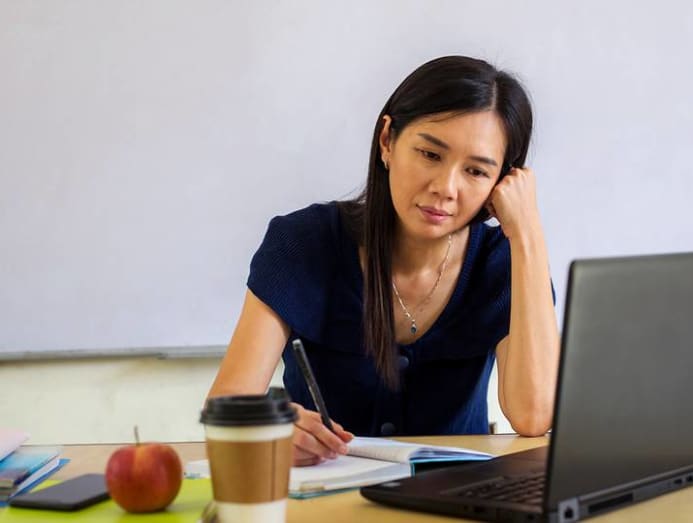
David, on the other hand, sees the benefits of equipping himself with the basics of counselling.
"For almost teachers, you'd have some course of relationship with the students. I recall going for it is a good thing … and so that I tin have a better journey with my students," he said.
According to him, teachers selected to get teacher-counsellors attend "a full five-day course", which he wanted to become for when it was offered to him. Merely he could not, owing to his heavy workload.
TEACHING AND COUNSELLING ROLES BLURRED
Equally it is, however, some teachers who are not teacher-counsellors have already been acting as counsellors if students are more comfortable talking to them, Cindy said.
"It falls on the instructor to practice the follow-up on their mental well-being, as well as triangulate with the parent. Nosotros end upwards wearing many hats: Teacher of cognition simply also a teacher of values and social well-existence, and also a teacher-as-caregiver."
So when Mr Chan said in his parliamentary speech that all teachers will receive enhanced professional development on mental health literacy "as a baseline", to further strengthen teachers' abilities to identify and back up students in need, some teachers CNA Insider spoke to questioned if the "burden" of taking intendance of students' mental well-being should fall solely on their shoulders.
In an e-mail response to CNA Insider's queries, the MOE said that the enhanced efforts will include areas such as understanding and recognising symptoms related to common mental wellness bug and suicide, strategies to de-escalate stiff emotions and impulsive behaviour, and facilitating classroom conversations on mental health with sensitivity.
"The new measures come up from the underlying assumption that teachers have, or could be equipped with, the power to diagnose and competently bargain with students with mental wellness issues under our charge," said Cindy, a secondary schoolhouse teacher.
"With poorly defined boundaries of where a teacher's role begins and ends with regards to mental wellness, the culpability in the case of a repeat incident will fall onto teachers," she added.
Ideally, teachers and school counsellors would collaborate in a symbiotic relationship, said Inner Lite Psychological Services clinical psychologist Tracie Lazaroo.
She explained that both teachers and school counsellors act as "gatekeepers", only they possess "unique resource" that volition help with their students' well-existence.
"Teachers are equipped with unique student-related knowledge including how they have been performing in form, their temperament, behavioral tendencies and level of interaction with other students," Dr Lazaroo said.
Co-ordinate to the MOE, teachers are trained to engage students to sympathise their problems, but should refer them to school counsellors should they demand "extensive back up".
Counsellors, Dr Lazaroo said, would exist equipped with "more in-depth interviewing skills". They would also be able to "create support strategies for the student" and make referrals to customs services for long-term back up.
Hence, some teachers, similar Joyce, experience like even with boosted training, they can never be fully equipped to take care of students' mental wellness, or that there is a limit to what they can practise.
"You care for them, you truly do care for them. And information technology breaks your heart to see them in this position. (Just) we all have different thresholds and once you pass that, I'k like, I don't know what to practice. I don't know what to say," said Joyce, who teaches in a secondary school.
"Genuinely, I'm merely comfortable to a sure extent. I just don't have the eloquence to phrase things in a fashion that would help a person and I think information technology'south a skill to be able to talk about (mental health) in a fashion that's helpful to a teenager."
"That'due south a skill that counsellors have."
Cindy agreed, noting that the expectation that teachers should be utilised to tackle mental health "hints at a more than systemic outcome regarding the perception of teachers and their duties".
"Every bit much as nosotros wish we have the capacity to do everything that is asked of u.s., the reality is that the more roles we take on, the worse nosotros are going to perform across all of them."
'TEACHING IS JUST 20 PER CENT OF THE Job'
The well-nigh common grievance for teachers who spoke to CNA Insider is having to care for students' well-being on tiptop of a burdensome workload.
"The preparation for piece of work was tough and and then information technology'due south worse when yous have so many students - having to go along track of their work, keep rail of their well-existence, and fifty-fifty just their names sometimes," said Rachel, who had had eight classes of 40 kids at one point.
In her Facebook post, Mdm Halimah as well said that for teachers already overloaded with piece of work, it is not possible for them to "delve deeply" into the issues affecting 1 child as that would require shut monitoring, observation and appointment.
Equally for teacher-counsellors, Rachel observed that fifty-fifty though those in her school were "slightly offloaded" in terms of teaching responsibilities, in that location were withal "a lot of backend" things that they had to nourish to.
"I always tell people that teaching is really merely xx per cent of the job. The rest is administrative, like doing lesson plans, classroom direction and marking."
"Fifty-fifty if y'all accept less classes to teach, when it comes to marker papers, testing exams, everybody has their load."

David likewise questioned if teacher-counsellors can successfully juggle the dual function if the number of teachers in a school does not increase - especially when in that location is discipline-based banding in school.
Bailiwick-based banding was introduced in 2019, where students volition take subjects at a higher or lower level based on their strengths.
READ: 28 secondary schools to pilot full subject field-based banding from 2020
"More banded classes means you'll need more than teachers. Information technology's not going to be easy to offload teachers to really focus on being a teacher-counsellor."
Additionally, what is "missing from the chat" of mental health in schools is the mental well-being of teachers, Cindy shared.
"Mental wellness problems among teachers are very present, yet rarely talked almost … I don't see how we tin create a safe space to discuss mental health problems when we ourselves are situated in an environment that discourages it," she said.
Some other teacher, who also declined to be named, described the mental health of teachers to be "a very sad matter right now".
"Despite all the positive media coverage of our successful pivot to home-based learning (HBL), the reality is that nosotros're struggling in schools to continue pace with the ever-changing Safe Direction Measures, oscillations between HBL and physical lessons, and the perennial need to still proceed speedily with the syllabus."
"Information technology's a whole new workload birthday and I think at this point teachers are only barely managing."
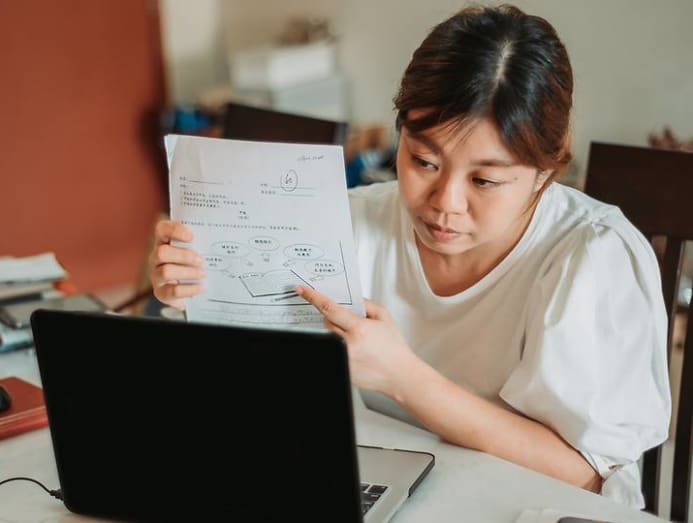
Ms Ong urged that "we must not wait at the pupil'due south mental well-being without looking at the teacher'southward well-being" as well.
"A student who is not well affects the wellbeing of a instructor and a teacher who is not well will too affect the students. These two things need to exist looked at in totality."
WHAT WOULD Brand COUNSELLING A Feasible OPTION?
1 19-year-old student, who wishes to be bearding, suggested offer students email or telephone call services like what is done at Samaritans of Singapore, such that students who are afraid of physical sessions may have an option.
She also suggested having routine mental wellness checkups, such that students who may be afraid to walk into the counsellor's room take a space to speak up nether the guise of a formal school event.
Some schools, like Marcus' junior college, have schoolhouse leaders offer peer support. Marcus, who holds a leadership position himself, was taught some techniques on how to spot students who might need mental health support or what to do when a student confides in him.
"I call up that's also a very of import function because ultimately, nearly people turn to their peers when they are facing issues," he said. "And it definitely would assistance to get students to know how to aid each other, and in actually serious cases to flag information technology out."
But he admits that the job can be overwhelming, especially with the already heavy bookish stress and workload.
In a higher place all, all students CNA Insider spoke to repeat making school counselling more approachable, with a strong emphasis on confidentiality.
"If there'due south no approachability and then no one would even see the schoolhouse counsellor," said Ms Lee. It starts with making the counsellor more visible to students, she said. "If you don't know how to meet the school counsellor, you might non want to ask the teacher for fright of judgement."
And while there may be a mismatch in expectations in seeing a schoolhouse counsellor, another student, Ms Chew, shared that it is helpful for students to share what they hope to reach out of counselling. But not all students may have the self-awareness or noesis to do so, she said.
"These are students, it'due south probably their start time starting this kind of affair. And then I hope that (school counsellors) volition be the ones taking the atomic number 82 in asking the students, guiding the students to realize what they want," she said.
MORE Preparation FOR Schoolhouse COUNSELLORS?
Other than the lack of resources in schools, Mdm Halimah as well said that school counsellors "may not be well-trained on issues affecting mental wellness".
In the 2022 American Counselling Clan report on the counselling landscape in Singapore, it also noted that while in that location are increasing numbers of individuals inbound the field with basic grooming, there is "limited opportunity for high quality clinical supervision".
In its e-mail response, the MOE said that school counsellors receive monthly professional supervision, peer support group sessions and individual clinical supervision from pb school counsellors.
"These take been continuing via online platforms in the midst of COVID-19 restrictions."
The MOE added that schoolhouse counsellors also deepen their noesis through workshops and courses such as "suicide assessment and intervention, psychological first aid, addiction, kid corruption or family unit violence, and multicultural issues".
Fifty-fifty with the measures in place, Ms Chen questioned if the current clinical supervision that school counsellors have admission to is sufficient, especially when "they probably already don't have many colleagues to bounce off" ideas and experience, every bit virtually schools simply take one school counsellor.
At Counselling and Care Centre, she conducts supervised preparation for professionals in the field and she has been working with some school counsellors who want to seek "actress supervision".
"We often encourage them to record their sessions - with the permission of their students - and showcase segments of their piece of work so we tin really wait at the skills."
From her feel working with school counsellors, she noticed that it is "really hard" for them to get more support and preparation to ameliorate their skills when they take heavy caseloads and are constantly "firefighting with higher risk cases".
"In this line of work, we can't just rely on our degrees. In that location's so much more conversation that needs to be carried out to back up professionals in working finer with people," she added.
"The most unsafe matter is when practitioners do on their own."
Irresolute PERCEPTIONS OF MENTAL HEALTH
In schools, there is the Character & Citizenship Instruction (CCE), which this year had a refreshed syllabus that gives more than focus on mental wellness and peer support. But teachers find that it is just "scratching the surface".
READ: Schools to offer mental health lessons from 2021; more trips to Asian countries
"The reality of the execution is … information technology might not ever piece of work considering kids are tired (from other classes). They don't want to hear me talk virtually how to be a skilful person. It's not something that y'all can learn by sitting down and listening," said Joyce.
Rachel added: "Teachers are then busy educational activity other lessons that during CCE lessons, we just literally evangelize whatever the school gives us. Information technology'due south actually hard to engage the kids in a manner that is real and that they tin can fully chronicle to."
This is why she as well felt that her students took CCE as "a joke".
"Students don't experience like they can ask anything. It's very difficult in a group of 40 - not every child wants to speak up, not every child wants to appoint. Whereas if yous had smaller groups, information technology'll be more intimate."
While part of the refreshed CCE syllabus teaches "resilience and social-emotional well-being" - which includes having a sense of gratitude and appreciation - Cindy felt that it perpetuates "toxic positivity".
"Before we get to resilience there are so many other logical steps a person struggling with his or her mental health tin go through - acceptance, for example. We really can't teach resilience through CCE. Inspiring videos and powerpoint slides tin can only go so far," she said.
Perhaps, beyond improving ratios and the quality of intendance, information technology is an attitudinal shift that is needed in taking care of students' - and even teachers' - mental health.
"Nosotros need to exist mindful of using mental resilience and mental well-being interchangeably. We actually need to stop talking about resilience every bit if (poor mental health) is merely something to snap out of," said Ms Ong.
"There isn't a strength more powerful than being able to bargain with your ain vulnerability, and I think we understate that."
Where to get assistance:
Samaritans of Singapore Hotline: 1800 221 4444
Institute of Mental Health's Helpline: 6389 2222
Singapore Association for Mental Wellness Helpline: 1800 283 7019
You can too discover a list of international helplines here. If someone you lot know is at immediate risk, call 24-hr emergency medical services.

0 Response to "‘With school counsellors, it’s really hit-or-miss’: Behind the challenge of safeguarding student mental health"
Post a Comment